Reading:
A Thousand Brains: A New Theory of Intelligence Jeff Hawkins
February 8th - February 21st, 2022
February 6th - February 8th, 2022
January 1st - February 1st, 2022
December 23rd - Jan 8th, 2022
November 21th - November 26th, 2021
November 15th - November 20th, 2021
September 23rd - November 15th, 2021
June 27th - August 04th, 2021
May 19th - June 08th, 2021
May 14th - May 18th, 2021
April 27th - May 13th, 2021
April 17th - April 26th, 2021
April 1st - April 16th, 2021
February 28th - March 31st, 2021
February 5th - February 28th, 2021
January 22nd - January 25th, 2021
January 19th - January 21st, 2021
January 5th - January 18th, 2021
This video exactly captures the feeling after reading this book. All I can say is that, this book is a must for every single human on the planet.
November 1th - November 24th, 2020
November 25th - November 30th, 2020
November 30th - December 2nd, 2020
* Second book for the Global Shapers Thimphu Hub Book club. *
Other than the student experiments and anecdotes, I found a lot of the stories and advice in the book doesn't capture the various complexities of life that determine what you can do. I do agree with Tina Seelig that you make your own luck, but you also have to be aware of your privileges that help incline luck towards you. For instance, socioeconomic status plays a huge role in being able to take risk and venture into the unknown. However, there is no mention of it anywhere in the book. At times, the ideas in the book felt a little geared towards western and in particular white population. Nonetheless, the book has insightful ideas to practice in everyday life.
Two ideas that have really stuck with me.
During my college years and even to this day, I have a tendency of seeing what someone needs and check if I have the skills and requirements to fulfill that. However, after reading this book, I have realized that you have to show people what you can offer, not what check boxes you fulfill.
In one of the stories, each student group had to generate as much money as they could from the initial $5 seed money in 2 hours. They then had 3 minutes to present on their idea and implementation the week after. The winning team had completely ignored the $5 and actually sold their 3 minute presentation time to advertise for a company that wanted to recruit students in the class. This was the first and the most powerful story in the book. It taught me to look beyond the noise. I would have been scratching my head to come up with an idea that uses the $5.
Why do some nations prosper while some are poor and often on the brink of collapse? According to Acemoglu and Robinson, a nation’s prosperity is all due to inclusive political and economic institutions. A political institution is inclusive if it is pluralistic (power is not in the hands of a few) and centralized (government having enough power to uphold law and order). Economic institution is said to be inclusive if there are strong property rights law, unbiased law and order and a level playing field for everyone. Extractive institutions on the other side are where power is in the hands of few and policies are geared towards their gains.
Although an easy read, the idea of extractive and inclusive institutions gets a little repetitive after a while. One of the biggest criticisms of the book would be the treatment of inclusive and extractive institutions as the one and only factor for a state of the nation. The authors fail to even acknowledge other factors like globalization. Additionally, the final chapter of the book is a major letdown given that there is no concrete idea/process for how an inclusive institution can be built or how countries can transition to it.
Side Thought:
In Bhutan, our kings have worked tirelessly to empower Bhutanese people. Contrary to the norm, our monarchy system was the furthest from an extractive institution. However, while reading the book, it occured to me that the few wealthy elites were constantly undermining their majesties' work by bending the rule of law for their gains. Given that, was the Bhutanese government and institutions really inclusive? I use past tense because now Bhutan is a constitutional monarchy and power and influence doesn't necessarily work the same way it used to. However, this does not mean that the government and institutions have become more inclusive but rather a simple fact that I was away for six years and don't necessarily know how things are running.
The Biggest Bluff is Konnikova’s journey from an amateur player to winning tournaments, self-realization and life lessons along the way. Maria Konnikova, a writer with a PhD in psychology and zero experience with gambling pursues professional poker to explore the uncertain realm of decision-making. Unlike roulette and chess where one is of pure chance and the other is of pure skill with complete information, poker is more like life, uncertain with incomplete information. Just as life, poker is about making the best decision with what you know (your cards), what everyone knows (community cards) and what you can guess of (opponent’s card). Throughout the book, Konnikova draws several parallels between life and poker which sheds light on how we think, act and decide.
" There’s no skill in birth and death. At the beginning and at the end, luck reigns unchallenged. Here’s the truth: most of the world is noise and we spend most of our lives trying to make sense of it. We are, in the end, nothing more than interpreters of static. We can never see beyond the present moment. "
Given that my first introduction to Norse mythology was Marvel movie Thor, I looked at Norse gods in a different light than this
book paints. For instance, I have always assumed and seen Thor as a righteous, do no harm kinda guy, but he isn’t completely
like that. The gods aren’t as mighty and sanctimonious as they are portrayed in movies. For instance, in one story, the gods are
convinced by Loki to bet a giant to build a wall big enough to surround Asgard. If the giant builds it within a certain time frame, he
wins the most beautiful princess in Asgard, otherwise nothing.
On the last day of the wall completion, the gods (even Odin) are euphoric, when Loki cheats the giant by luring the giant’s horse and
leaving the giant unable to complete the wall. Such stories paint a vastly contrasting picture of the Norse gods to
what I had assumed.
All in all, this is a very easy and delightful read. The short stories did feel a little disconnected from each other at
times, but it nonetheless shows the full spectrum of the god’s actions.
This book is the scientific answer to all the cool stuff that happens in science-fiction movies and things that I wish I had all the time. From time travel, teleportation to invisibility, UFOs and many more, Michio Kaku explores the “impossibility” of today becoming a reality tomorrow. Each chapter is about one current “impossibility” which falls under three categories of impossibilities: class 1, class 2 and class 3.
The returns on capital or wealth as Piketty uses interchangeably grows at a higher rate compared to the economic growth rate. And given that income from capital is mostly concentrated in the top wealthy families, this phenomenon of r > g where r is the return on capital and g is the economic growth rate is the root cause for increasing inequality. This is at the heart of the argument in the book. Europe before the two world wars had inequality at level even higher than now. Piketty argues that due to the world wars, most capitals were destroyed and in the process and saw a huge decrease in inequality. However, now with increased peace and stability, inequality is growing at a pace that is about to reach or exceed the Belle Époque era. It will be interesting to see how the current Covid pandemic has affected earnings of people in different ladders of wealth. It has definitely hit the low incomes the hardest but how has it affected the top 1 percent or the top 10 percent. Jeff Bezos, the world richest man has seen an increase in his wealth during the pandemic while millions of people all around the globe are losing their job and their livelihood.
In his book, Frankopan argues that the economic center of gravity is shifting from the west to the east. Decisions that really matter today in the world today are being made not in London , Berlin or Paris but in Beijing, Moscow, Tehran, Delhi and Islamabad that are on the silk road. However important and dominant the silk road is in the global economy, it is also a region riddled with conflicts, dictatorships and corruption which has left the region as fragile as it is important and dominant. One interesting fact from the book: “The principal shareholder in the firm that owns the Carrara marble quarries in Italy is the bin Laden family, which means the marble used in the Freedom Tower in New York City is quarried by the family of Osama bin-Laden, who engineered the destruction of the Twin Towers that previously stood on the same site on 9/11.”
This was the first book that Global Shapers Thimphu hub book club read. What is Global Shapers Thimphu hub you may ask, click here to find out. When was the last time your disadvantages actually served to be an advantage, this is the main thesis of the book. Disadvantages aren’t always bad, sometimes they are your greatest asset. Just like any of his books, Malcolm Gladwell defends his claim through multiple anecdotes which slowly loses its relevance to the topic as the book progresses. I am not sure if this is only me but the stories/anecdotes in later chapters of the book becoming less and less relevant to the main topic seems like a trend in his books. It is clear and partially understandable that most stories in his books are cherry-picked. However, it becomes troublesome when Gladwell makes a sweeping generalization based on these stories and decides to ignore other factors. For instance, the early part of the book talks a lot about successful people with dyslexia. Gladwell makes the case that dyslexia had a major role if not all in the success of these people and forgets to account for factors such as but not limited to family support and race (since most stories are US-centric and race plays a huge role). All in all, the book serves as a good reminder that drawbacks and failure can be a powerful tool to success in life.
__________________________________________
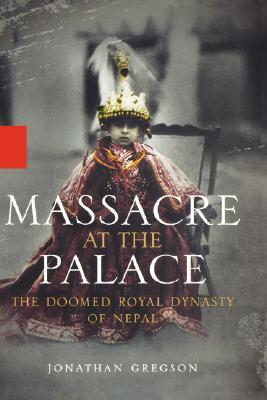
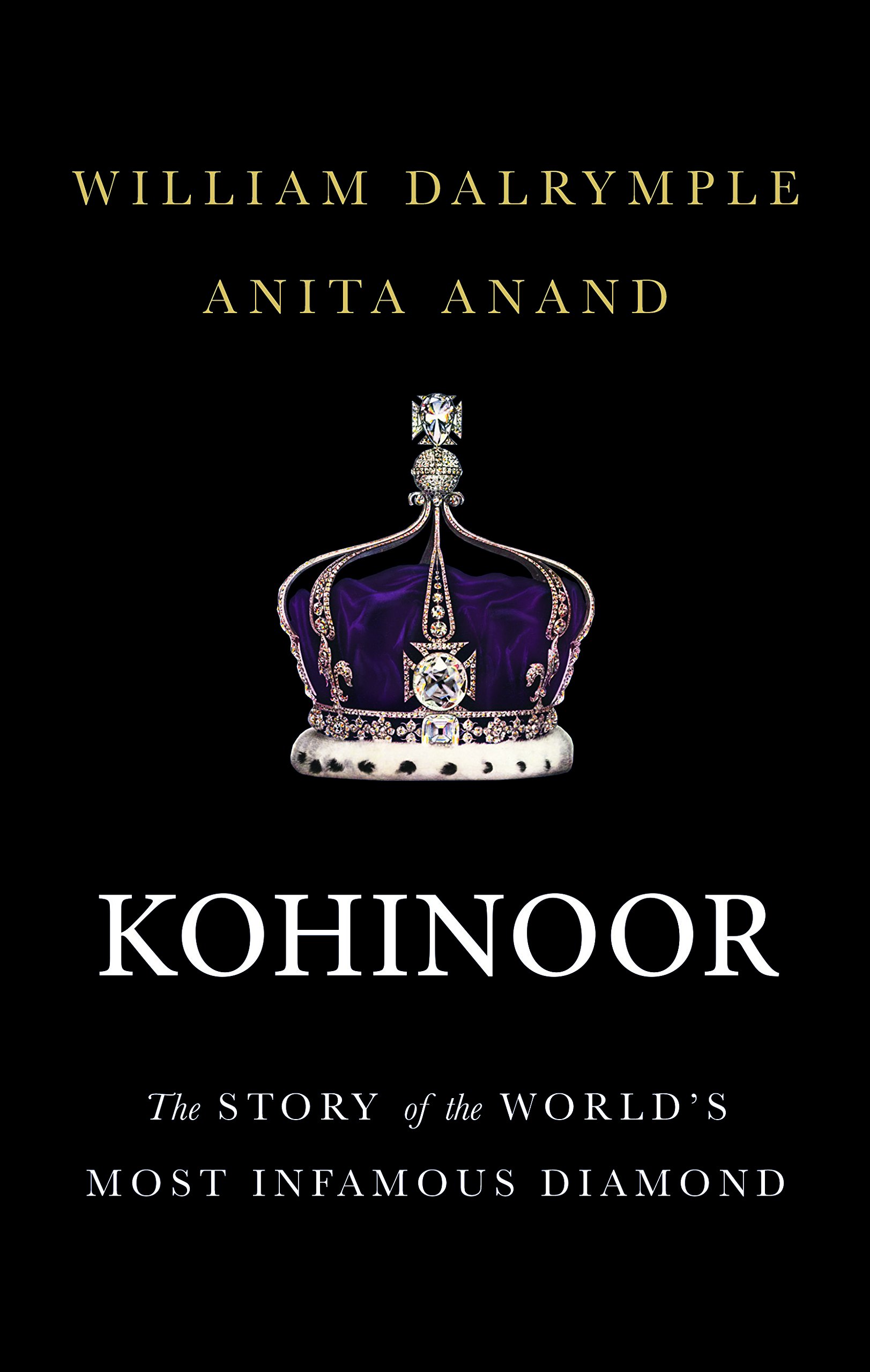
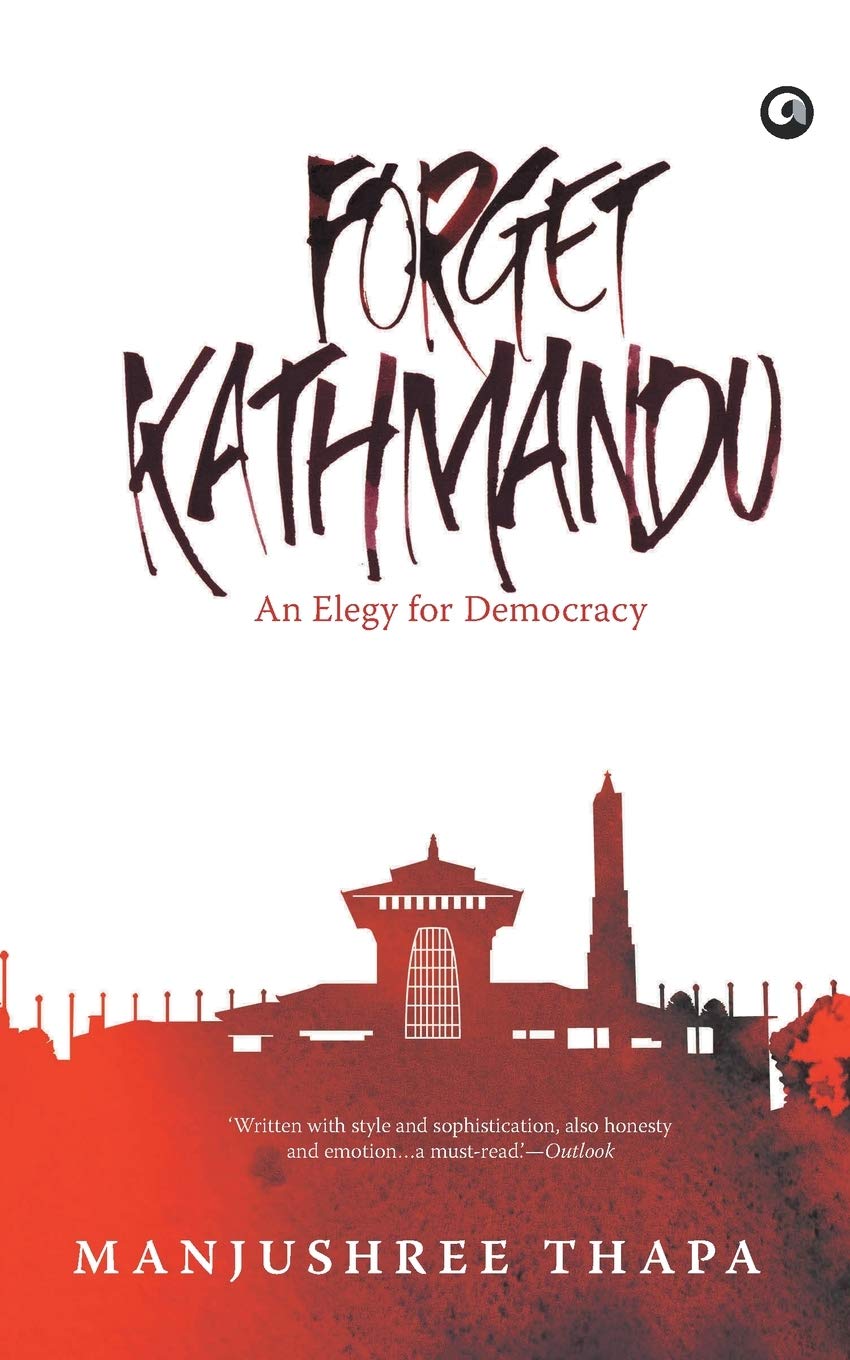
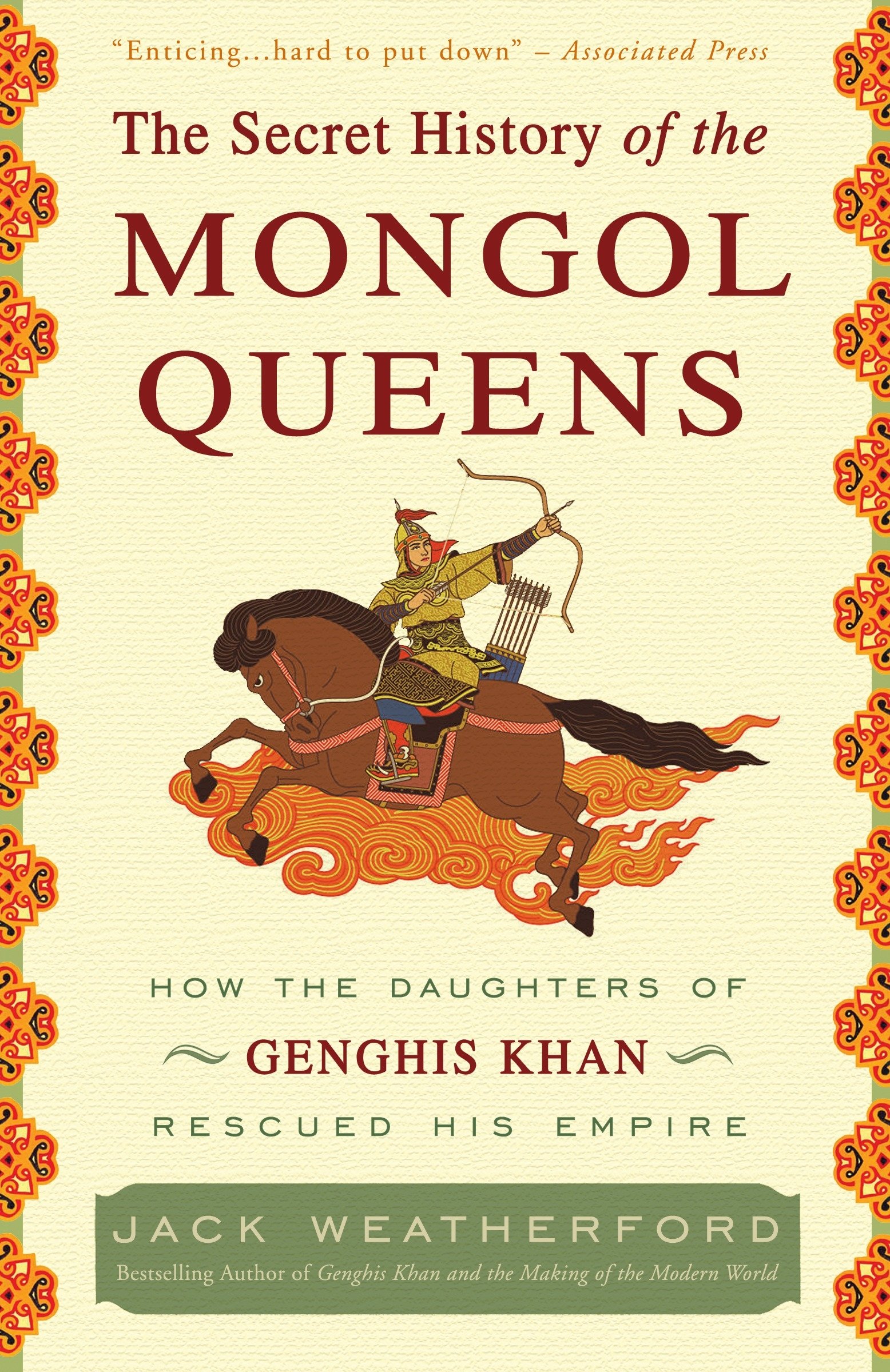
These three books took me all the way from the 12th century to the 21st century. As seen throughout history, these stories were filled with wars and bloodshed but ultimately it boiled down to leadership, especially in times of crisis. The Mongol queens helped Genghis Khan build the largest contiguous land empire in history. However, weak leadership marked by constant sibling rivalry after the death of Genghis Khan eventually led to the fall of the empire. Kohinoor, the most infamous diamond was eventually lost to the British after the death of Ranjit Singh (Sikh emperor) which was also marked with several political turmoil, coups, and assassinations. In Nepal, the most recent story of all the books, the Maoist party gained its foothold (which eventually led to Maoist insurgency) due to the political unrest within the “democratic government of Nepal” and the trepidation of the Monarch taking control of the country. It was a complete coincidence, that I read ‘Democratic Transition in Bhutan’ right before I read these three. The sharp contrast between the Bhutanese Monarchs and the leaders that emerged in those three books is exactly why most Bhutanese love and worship our kings.
Reading List I would love your suggestions :)